
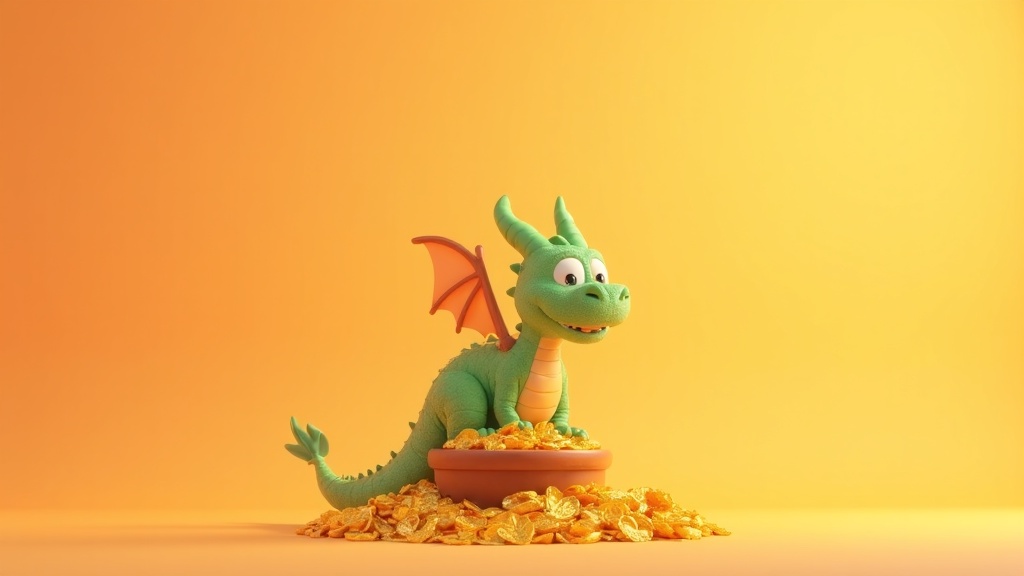
What's your favorite kind of dragon: one that guards a mountain of gold, or one that brings the life-giving rain?
Get ready for an adventure because today on History's Not Boring, we’re diving into the world of legendary creatures that have captured imaginations for thousands of years: Dragons! These amazing, scaly beasts pop up in stories from almost every single corner of the globe. Some dragons are terrifying monsters that breathe fire, while others are wise, helpful water gods. We are going to learn the difference between a fiery European dragon and the lucky, water-loving dragons of China, making this a must-listen for kids ages 4-12! Many scholars think dragon myths started because ancient people found huge, mysterious dinosaur bones!

Mira says:
"I love that in some places, like ancient China, dragons were seen as symbols of good luck and power—totally different from the scary ones we hear about in the medieval knight stories! It shows how one idea can look totally different depending on where you are in the world."
What Are Myths and Legends Anyway?
Before we meet any flying lizards, let’s quickly talk about what we’re learning about! Stories told over and over again are either myths or legends. A myth is often a made-up story that tries to explain big mysteries, like where the rain comes from or how the world began. Think of the Greek story about a dragon named Kun’s son, Yu, who turned into a big, golden dragon to help dry the flooded earth!
A legend, on the other hand, is a story people say *actually* happened, even if we don't have proof. The famous story of Saint George fighting a terrifying dragon to save a princess is usually called a legend because there might have been a real warrior named George, even if the dragon part is just a great tale!
Mind-Blowing Fact!
Did you know? In many European stories, the dragon's eyes were rumored to be made of stone, and if you wore a ring set with one of those stones, you would have magical powers!
The Facts About Fire-Breathing European Dragons
Let's start with the dragon you probably see most often in books and movies! The European dragon is often a giant, scaly lizard with leathery, bat-like wings, a long tail, and a serious fire problem. These dragons usually live in dark caves, mountains, or castles, and they *love* gold! They are often seen as symbols of evil, maybe because they like to hoard treasure and attack towns and farms.
Commonly seen with either two legs and wings (like a Wyvern) or four legs.
The 11th to 13th centuries were when Europe was obsessed with these stories.
Some old stories claim a dragon's blood has special, sometimes dangerous, powers!
How Do Chinese Dragons Compare to European Ones?
Now for a big change of scenery! Chinese dragons, called 'Lóng,' are usually the exact opposite of their European cousins. While European dragons are often scary and selfish, Chinese dragons are seen as wise, friendly, and super lucky!
Water, Weather, and Wisdom
Chinese dragons are deeply connected to nature, especially water. They are believed to control things like rivers, rainfall, and even storms. They don't usually breathe fire; instead, they might bring clouds! Farmers would pray to them for good harvests. You might even see them dressed like kings, because the dragon was the symbol of the Emperor of China.
💡 Did You Know?
The Chinese dragon is a real mix-and-match creature! Ancient descriptions say they can have the head of a camel, the horns of a stag, the body of a snake, and the claws of an eagle. It’s like they took the best parts from lots of animals to make one awesome beast!
🎯 Quick Quiz!
Which famous Chinese Dragon King is believed to rule over the East Sea?
Why Do So Many Cultures Have Dragons?
It’s wild that people all over the world—from ancient Greece to Southeast Asia to the Americas—all dreamed up a giant, scaly creature! What could be the reason for this global 'dragon bug'?
- Dinosaur Bones: As we mentioned, finding massive bones from long-dead dinosaurs might have made ancient people think giant reptiles once walked the Earth.
- Primal Fears: Dragons often combine features from animals humans naturally fear: the scales of a snake, the claws of a big cat, and the soaring power of an eagle.
- Universal Need for Water: Since so many ancient cultures relied on farming, creatures that controlled the rain (like the Chinese Lóng) became super important and powerful figures in their stories.
So next time you see a dragon, remember it’s not just one creature! It’s a mix of history, fear, and wonder, showing us how much people across time and space have loved to tell epic stories for kids just like you!
Questions Kids Ask About Myths & Legends
Unleash Your Imagination!
We hope you loved learning about these incredible, legendary beasts! Whether you prefer the water-bringing Lóng or the treasure-hoarding Wyrm, dragons remind us that stories are an amazing way to explore history, culture, and what people long ago thought about the world. Keep listening to History's Not Boring for more amazing tales!