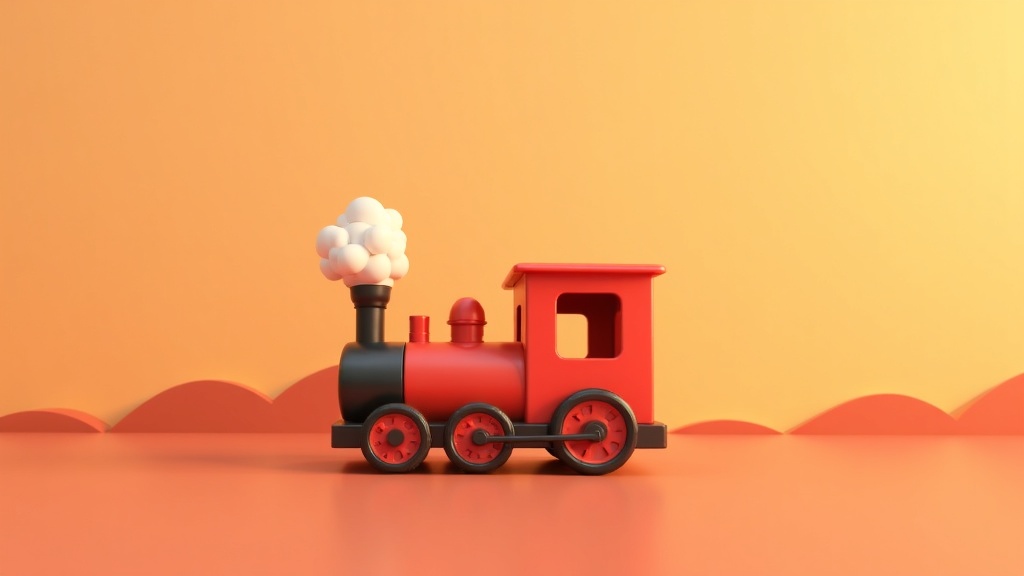
CHOO-CHOO! Have you ever heard the powerful sound of a train whistle echoing in the distance? What about seeing those long lines of cars zoom by on tracks?
Trains are one of the most important inventions ever! They didn't just make travel faster; they helped connect huge countries and brought new things to people who lived far away. The story of the train starts way back, long before cars or airplanes, with a powerful invention called the steam engine. The very first steam locomotive that hauled a load over a distance was built by Richard Trevithick in 1804! But trains weren't always big, noisy, and smoky like the early ones. They started small and got faster and better with every new idea engineers had. This invention changed everything for how people lived and worked for kids like you today, it’s easy to hop on a train, but it wasn't always like that!
Mira says:
"Wow, Finn! The idea that horses used to pull wagons on tracks until steam power took over is mind-blowing! Imagine having to haul heavy coal at just 4 miles per hour! Trains truly are a giant leap for transportation!"
What is a Train and What Made the First Ones Go?
A train is simply a group of connected vehicles that run along a special track called rails. These vehicles are pushed or pulled by a special engine called a locomotive.
Before the steam engine, people in ancient times, like the Ancient Greeks in 600 BC, sometimes used grooves carved in rocks to keep wagons on track, but they were pulled by horses or people!
The real magic started when people figured out how to use steam to make things move. A steam locomotive burns fuel, usually coal, to boil water and create super-hot steam. This steam pushes big parts called pistons, which turn the wheels around and around!
Mind-Blowing Fact!
The word 'train' actually comes from an old French word, *trahiner*, which means 'to pull' or 'to draw'!
Meeting the 'Iron Horses': The Steam Age Stats!
The first full-scale working steam locomotive for railways was built by Richard Trevithick in 1802 at the Coalbrookdale ironworks in the UK, though the first one to actually haul a load over a distance was in 1804!
In 1825, George Stephenson's *Locomotion No. 1* pulled the world's first public passenger train between Stockton and Darlington. It carried 450 passengers at a speed of about 15 mph!
George Stephenson became so famous for improving trains that people nicknamed him the 'Father of the Railways'!
(Richard Trevithick)
(1825)
(Set by Stephenson)
How Did Trains Get So Fast?
Engineers were always trying to make trains faster, stronger, and cleaner. After the smoky steam engines, a new type of engine arrived that changed everything again: the diesel engine, which became popular in the 1930s!
Diesel trains are super powerful for carrying lots of heavy cargo and are cleaner than coal-burning steam engines. Later on, in the 1960s, we got the amazing bullet trains!
The Rise of High-Speed Travel
Bullet trains, or High-Speed Rail, use powerful electricity to zoom across the tracks! Japan's Shinkansen, the first bullet train, started running in 1964 and can zoom up to 300 mph!
These modern trains are sleek and quiet, making travel across long distances feel as fast as flying in some cases! They show us how much this amazing invention is still changing the world for kids and grown-ups alike.
💡 Did You Know?
By the time of the American Civil War (in the 1860s), there were already over 30,000 miles of rail track in operation across the United States alone! That's enough track to circle the Earth more than once!
🎯 Quick Quiz!
What famous locomotive, designed by George Stephenson and his son Robert, won a major competition in 1829 and proved steam trains could carry passengers between cities?
Who Uses Trains Today?
Trains are still a huge part of our world! We use them for tons of important jobs, even though they look totally different from the old steam monsters.
- Carrying People: Fast electric commuter trains get people to work and school in big cities every day.
- Moving Stuff: Super long freight trains haul huge amounts of cargo—like food, toys, and building materials—across entire continents!
- Fun Trips: Some people still love riding special, historic steam trains for a fun, nostalgic trip back in time!
From iron rails in ancient grooves to sleek, electric rockets zipping across countries, the story of the train is a fantastic journey through human invention! The next time you see or hear a train, remember the clever inventors who turned steam and steel into a machine that truly moved the world!
Questions Kids Ask About Inventions & Technology
Keep Exploring the Tracks of History!
What an exciting ride through train history! Next time you see a train, remember all the clever engineering that made it possible. Keep your curiosity switched on, because history is always ready to roll into the next great story!