
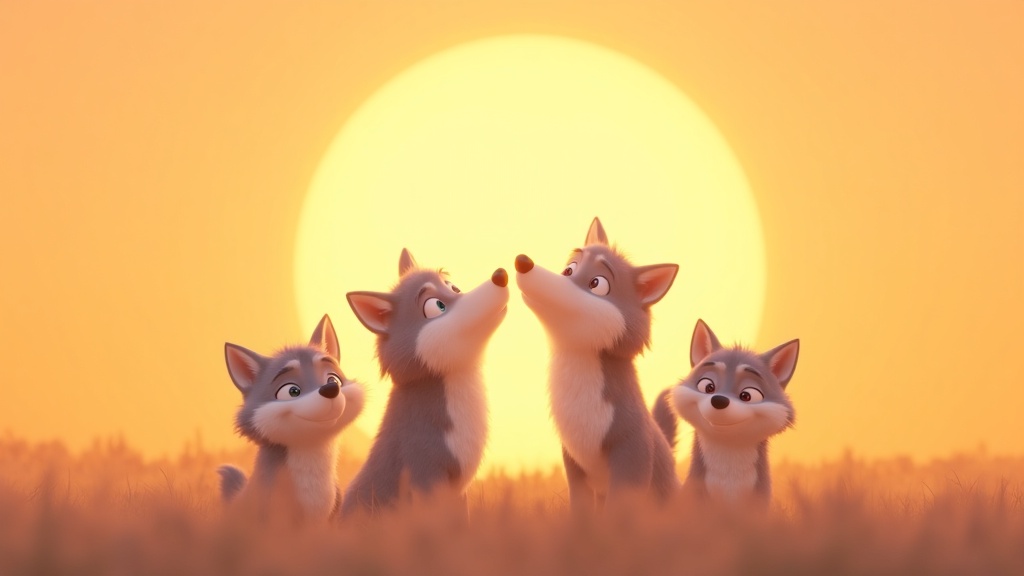
Have you ever heard a spooky, long howl drifting through the night and wondered who—or what—was making that sound?
Get ready to meet one of nature’s most amazing pack animals: the wolf! These incredible canines are the wild ancestors of our cozy pet dogs, and they live lives full of teamwork and thrilling adventures. Wolves are super important for keeping nature healthy. We are going to learn why they are such great hunters and how they talk to each other using secret signals! Did you know that wolves are the largest wild members of the dog family? An average adult gray wolf can weigh up to 110 pounds!

Mira says:
"I heard a wolf's howl can travel up to **10 miles** away! Imagine shouting that loud—that's pack power!"
What is a Wolf Pack?
Wolves don't just wander around alone; they live in super-close groups called packs! Think of a pack like a big, fuzzy family that sticks together no matter what.
Most of the time, a pack is made up of a mated pair—the parents—and their children, or pups, from different years. Packs can have as few as two wolves or as many as 25, though the average is often around 12.
Being in a pack is a huge advantage because they can work together to do things that would be too hard alone, like protecting their home territory or catching very large meals.
Mind-Blowing Fact!
Wolves have 42 teeth—that’s 10 more than humans! Their sharp teeth are perfect for ripping meat and helping them eat quickly when they make a big kill.
Wolf Stats: Size, Speed, and Smell Power!
Wolves are built for the wild! They have strong bodies and amazing senses that help them survive, even when life gets tough.
When it comes to movement, wolves are incredible distance runners. They can trot at a steady pace of about 5 miles per hour all day long, covering huge areas looking for food!
(Short Bursts)
(Sense of Smell)
(Can live to 13!)
(Depends on food supply)
How Do Wolves Talk to Their Pack?
Wolves have a whole secret language made up of sounds, smells, and body wiggles! It’s how they keep the whole pack organized and safe.
The most famous wolf language is howling. They don't howl at the moon—they howl to say 'Hello!' to pack members far away, or to send a big 'Stay Out!' sign to other wolf families who might wander too close to their land.
More Than Just Howls
Wolves use more than just their voices to chat. They use their bodies, too! Dominant wolves (like the parents) stand tall with their tails held high to show they are in charge.
If a wolf is feeling nervous or wants to show respect to a higher-ranking wolf, it will make itself look smaller, tuck its tail, and maybe even roll over! This is called being submissive.
💡 Did You Know?
Wolves have two layers of fur! A thick, soft inner layer keeps them super warm when temperatures drop way below freezing, and a longer, coarse outer layer sheds snow and water!
🎯 Quick Quiz!
What is the main reason wolves howl, according to scientists?
What's on the Wolf Menu?
Wolves are carnivores, which means they mostly eat meat. Their favorite meals are large, hooved animals like elk, deer, and moose—scientists call these ungulates.
Because these animals are so big, wolves hunt together as a pack. They use their amazing speed and teamwork to outlast their prey!
- Feast or Famine: Wolves often live a 'feast or famine' life. They might eat up to 20 pounds of meat after a big hunt, but then go days without any food!
- Opportunists: If a big meal isn't around, wolves aren't picky! They'll eat smaller things like rodents, birds, and even fish or insects if they have to.
- Pack Order: In a pack, the alpha male and female (the parents) eat first before the other members get their turn. That's another reason to work together!
Wolves play a vital part in their home, or ecosystem. By hunting animals like deer, they help keep those populations balanced, which means the forests and plants stay healthy for everyone! Remember, though they look tough, wolves usually run away from people; they only fight if they feel sick or are protecting their pack.
Questions Kids Ask About Animals & Nature
Keep Howling About History!
Wow! We learned so much about these amazing, dedicated pack animals. From their 100x stronger noses to their amazing teamwork, wolves are truly one of nature’s coolest survival experts. Keep listening to History's Not Boring to discover more awesome stories from the world around us!